It is rare not to need to justify the way you are doing your research or have set up your business model, to a range of different stakeholders all with their own economic, environmental and social interests. Managing these responsibilities can be a challenge which is why researchers at Harper Adams University have been working on a way to weight different decisions and give them scores, to find out how to balance the various interests involved. This process is called Life Cycle Analysis (LCA) and it may sound like either common sense or extremely arbitrary but it has been used to optimize the production of a grass-based bio-fuel.
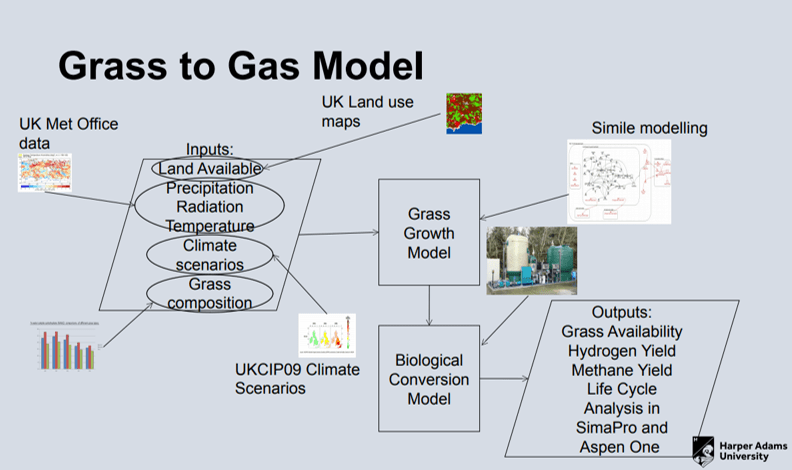
This is a slide taken from the seminar by Dr Toop on which this post was based. Here you can see the first step of the analysis where the process is mapped out to design a mathematical model.
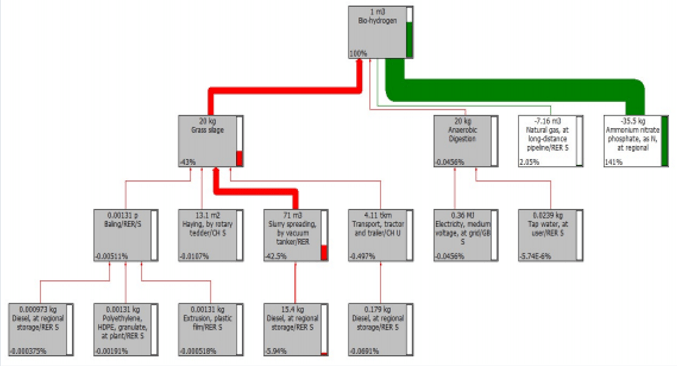
The model output can be used to identify where the importance of the different factors, whilst also allowing their adjustment until either the highest output or lowest input are achieved.
This analysis does require high-quality data, robust planning and clear system boundaries. Furthermore, there are different types of LCA which focus on different types of systems or balancing costs with different types of environmental impacts. The most appropriate analysis and the effective implementation can be achieved by consulting experts such as Dr Toop.
The LCA system will continue to be refined as it is applied to more systems within both academia and industry. With few competing standardized approaches to quantifying the optimization of systems, it is worth considering next time you find yourself needing to justify your systems.
 Communicating Biology